Welcoming and including all of God’s children in worship is important work. On this page you can find information and resources about:
- Children’s Bibles
- Livestreaming
- Prayground/Grace Space
- Worship Bags/Boxes
- Purchasing Items for a Prayground
- Liturgical Library
- Neurodiversity (coming soon)
- Sacraments (coming soon)
Welcoming Children
Announcement
Sometime during the service, the liturgist or pastor makes a statement about how children are welcome in worship, why, and how members of the congregation can care for one another.
Pew Cards
Some churches provide a “pew card” that shares a message for grown-ups with children and for members of the congregation about why children are welcome and how we can care for one another.
Examples:
Building Faith Article with several examples
Pew Cards from Traci Smith ($)
Including Children in Worship
Children learn through modeling, play, experience, etc. Invite children and trusted grown-ups to serve together at church. Ideas include: ushering, Acolyte, Liturgist (older elementary children can read Scripture, younger children can announce a hymn or song or stand with an adult), music (children’s choir, solo, etc.), include child/youth friendly elements in a sermon such as sharing a story or example that they can relate to, inviting people to listen for a specific word and keep track of how many times the preacher says it, etc.), Interactive worship components (drama, storytelling, images, etc.), or worship notes for children/youth.
Offering Children’s Bibles in the worship space is another way to include children. Learn more about selecting and incorporating Children’s Bibles in your worship space.
Livestreaming Worship with Children
Livestreaming worship has been part of our digital world. While it is meaningful to livestream, especially for people who are not able to attend in person, it is important to ensure and protect children and youth.
General Guidance
Screening Staff/Volunteers
- Staff or volunteers who are livestreaming or recording should be screened and trained on related policies and procedures
- Training should include who can/cannot be on camera, camera-free zones, care when children/youth are on screen, etc.
Designated Camera-Free Zone
- Designate an area of the sanctuary where the livestream camera(s) will not view and communicate to the congregation that if they do not wish to appear on the livestream, that is where they should sit during the service.
- This may be a portion of the sanctuary that the camera(s) can’t reach or an area that the camera operator(s) are trained to keep out of the shot.
- Make sure all camera operators know not to move cameras into positions that would include these designated areas.
- If you have a Grace Space or Prayground, ensure it is included in the Camera-Free Zone so children and families can safely engage in worship in age-appropriate ways.
Children On Camera
- Use only first names to limit the ability to identify specific individuals
- Encourage families to avoid children wearing clothing or accessories that identify their school districts, sports teams, etc.
- Develop, communicate, and implement policies and procedures around how and when contact information for individuals is shared during worship services (or any church communication/event)
Children’s Moments
- Consider ways in which children’s exposure during children’s moments can be limited. Options include:
- Keeping the camera angle wide so individuals cannot easily be identified
- Having the children face the adult leading the moment so that the back of children’s heads are mainly what the camera captures
- Keeping a tight zoom on the adult leading so only they are shown
- Putting up a graphic during the Children’s Moment so that only voices are heard, and no individuals are shown
Communication
- Make sure every family is aware that the worship service is livestreamed and that images of children may be captured by the camera(s).
- Get permission for each child to be shown on camera from their legal guardian(s) and consider asking children themselves if they are comfortable with being seen on the livestream or shown on the church website/social media. Renew permission annually.
- If anyone denies permission, communicate this to all church staff and any volunteers involved with livestreaming the service.
- Encourage the individual(s) who has denied permission to stay within Camera-Free Zones in the sanctuary and discuss ways to blur faces if the individual(s) is ever involved with leading a portion of the worship service.
- Develop, communicate, and implement policies and procedures around how and when contact information for individuals is shared during worship services (or any church communication/event)
Photo & Privacy Practices Sample Policy
- Example from River Road UMC policy around the use of images of children and the information that may be shared, including a permission form and procedure for opting out/take down requests.
Additional Resources
- Common Sense Media: website with lots of resources for parents & educators
Praygrounds
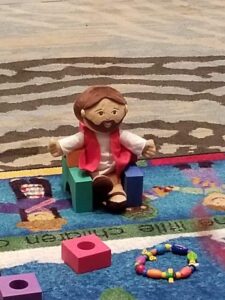
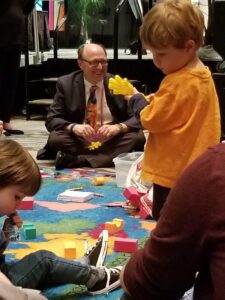
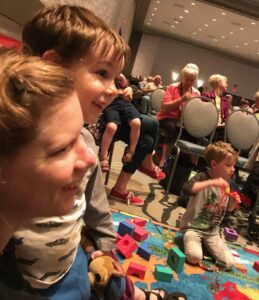
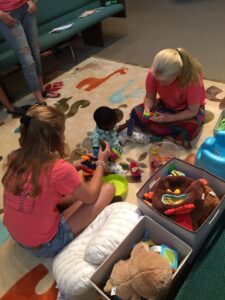
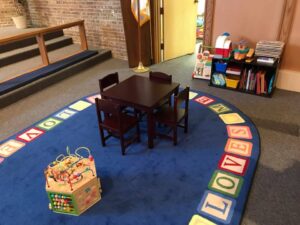
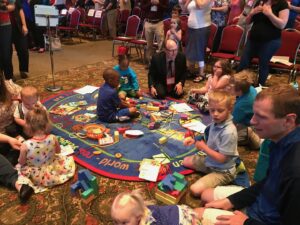
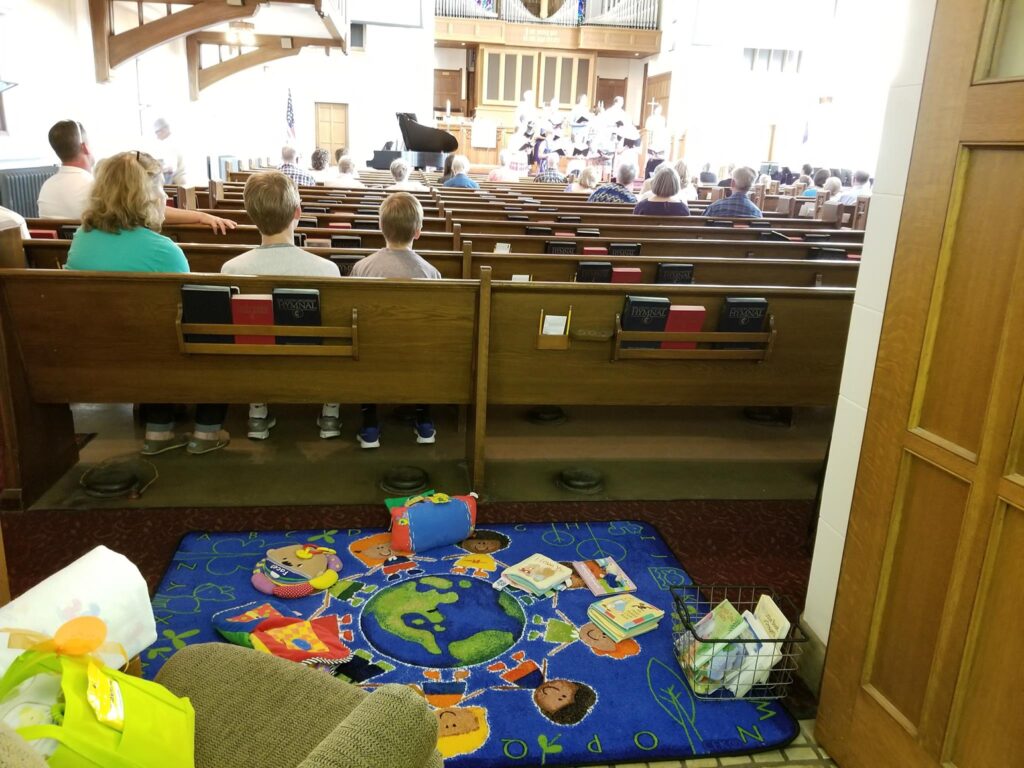
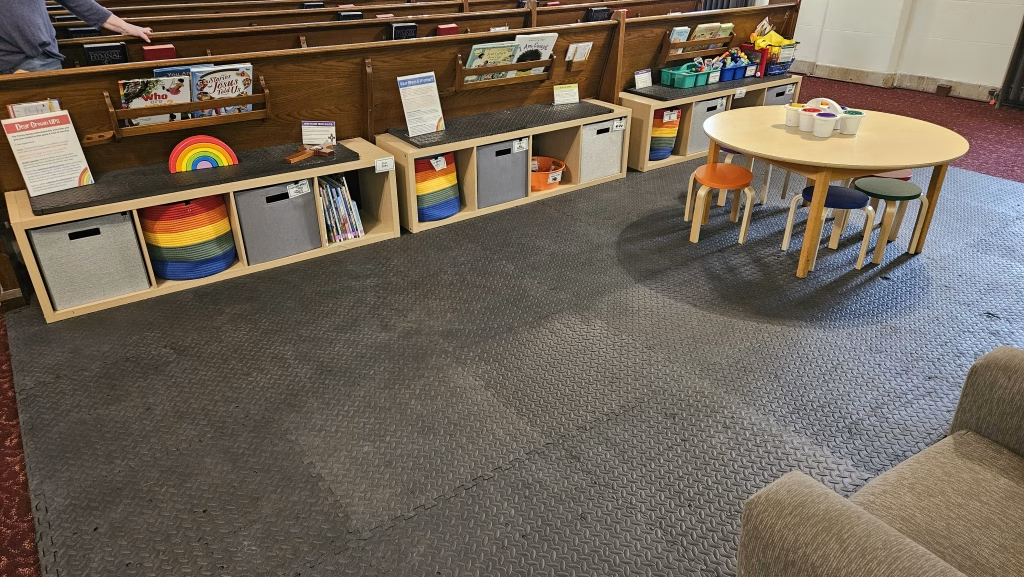
The Prayground (also known as a Grace Space) is an intentional area in the worship space for children and families to participate in worship. The space is often created in a way that welcomes young children through elementary age children with quiet toys, books, and objects that relate to the Scripture, season or theme. Praygrounds are often near the front of the sanctuary so children can see and hear, but they can be placed wherever it works the best in the worship area. View pictures of different Praygrounds from around the Michigan Conference below. To learn more you can download the Prayground Info Brochure.
Worship Bags/Boxes
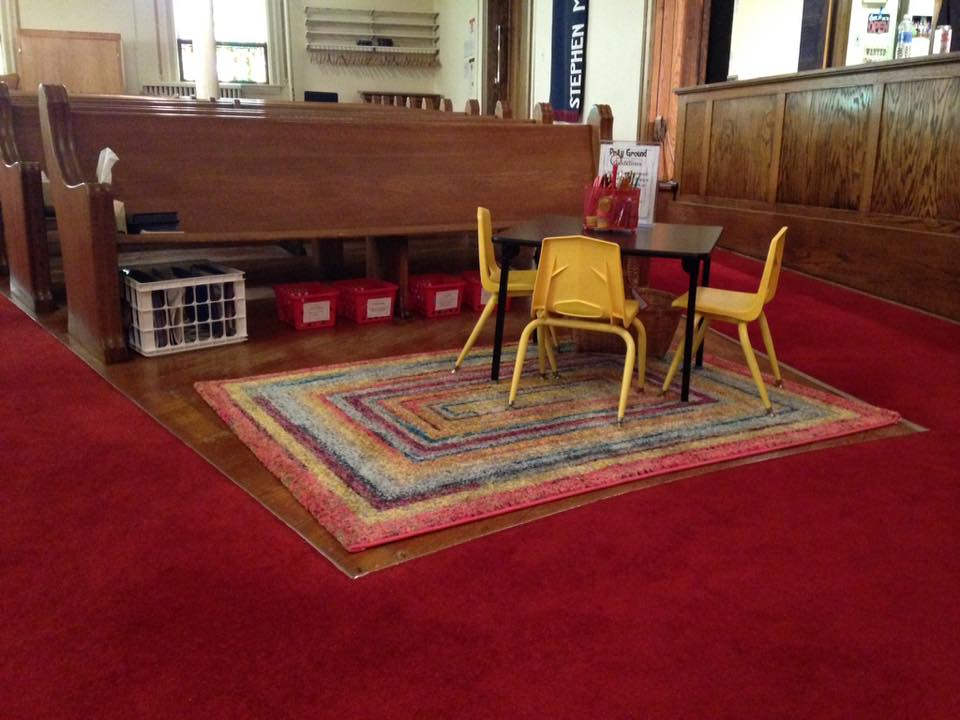
Praygrounds are not the only way to include children. Some worship spaces are not conducive to this type of space and renovating is not an option. Another option is to provide worship bags or boxes or provide a table of options that children can choose from. Items you may want to consider including are:
- Blank Paper
- Crayons
- Pipe Cleaners (Chenille Stems)
- Building blocks (like Lego)
- Finger Labyrinths
- Magnet Tiles (for older children)
- Doodle Boards (or similar)
- Soft blocks
- Fidgets
- Books
- Infant toys
- Kids Worship Notes (a few examples)
- More!!

Purchasing Items for a Prayground
Items from the Grace Space at the 2026 Michigan Annual Conference
Items from the Annual Conference 2025 Grace Space
Area Rugs – Often a Google search is a good place to start, then compare prices. Other suggestions include:
Child Friendly Furniture
- Locally owned small businesses
- Lakeshore Learning
- Wayfair
- Ikea
- Discount School Supply
- Amazon
(The merchants listed on this page are solely for the convenience of the reader. The Michigan Conference does not endorse any of the merchants, and neither the conference nor its employees receive any remuneration from any merchant listed hereinabove.)
Resources and Supplies:
- Consider resources that are connected to the church year, liturgical calendar, Bible stories, faith words, instruments, and materials that inspire and engage in worship.
Toys, sensory items, baby items, boxes, cleaning supplies, etc.
- Locally owned small businesses
- Lakeshore Learning
- Amazon
- Local stores
Books
- Locally owned small businesses
- Cokesbury
- Beaming Books
- Flyaway Books
- Christian Book
- Amazon
Additional Resources
- Illustrated Ministry (coloring pages that may go along with sermon series or seasons)
Liturgical Library
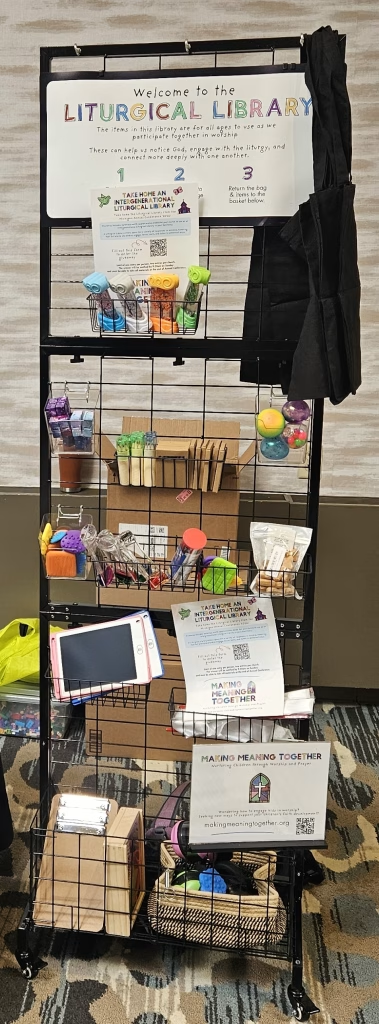
The Liturgical Library is a space that includes items for children (and adults) to use during worship. Kids can take a bag and fill it with supplies and materials to help them engage their hands and minds throughout worship.
The Liturgical Library is also an excellent option for churches who do not have space or aren’t ready for a permanent Prayground or Grace Space. Children can take the items to their seat/pew and engage with them during worship.
Click here to download the list of supplies that were included at the Michigan and Rio Texas Annual Conferences in 2026. The download also includes additional examples of how to create the display.